

Introduction: Why Mel Gibson’s Filmography Still Matters in 2026
Do you ever feel buried by the endless options on streaming apps? You scroll and scroll, but nothing grabs you. That is content overload.

And it hits hard when you try to find the real standout movies from a star like Mel Gibson.
Mel Gibson’s career spans more than four decades. He shocked us as Mad Max, made us laugh in Lethal Weapon, and then moved behind the camera to direct bold hits like Braveheart and The Passion of the Christ. The numbers back up his staying power. His films have pulled in serious box office dollars over the years, with hits like Apocalypto conquering the top spot in 2006 and Happy Feet earning millions weeks after release, according to CBS News. You can check his full box office history here.
But here is the problem. It is easy to get lost trying to separate his blockbusters from his overlooked gems. Some of his best work is not the most famous. This guide gives you a clear, evidence-based breakdown of the most significant Mel Gibson movies. You will know exactly which ones deserve your time.
And if you love this kind of curated help for other genres, you can also browse movies through lists that cut the noise and match your taste. No more endless scrolling. Just good films waiting for you.
The Rise of a Hollywood Icon: Early Career and Breakout Hits
To really understand the full scope of mel gibson movies, you have to go back to the very beginning. Before he was a Hollywood director or a household name in America, Gibson grew up in Australia. In 1979, a gritty, low budget film called Mad Max hit theaters. It was raw and completely unlike anything audiences had seen before.
That movie launched a massive global franchise. It turned Gibson into an international star almost overnight. According to his biography on Britannica, those early action adventure films built the foundation for his massive fame. Mad Max showed he could carry an entire movie with just his quiet intensity and dangerous energy. For anyone exploring iconic mel gibson movies, this is ground zero. It is a must watch.
Then came Hollywood. After proving himself in Australia, Gibson made the jump to American blockbusters. His next big hit was the one that truly cemented his status as an action legend: Lethal Weapon in 1987. The chemistry between his wild character Martin Riggs and Danny Glover’s weary Murtaugh was electric. It was funny, thrilling, and emotionally gripping. The series ran through the 80s and 90s and showed that Gibson could easily handle a big studio franchise. His biography on Biography.com highlights this series as a key part of his career story. If you want action packed mel gibson movies, the Lethal Weapon series is essential viewing.
But here is the thing about Mel Gibson. He didn’t just want to be an action star. He wanted to act. So he took on dramatic roles that pushed him into new territory. In 1984’s The Bounty, he played Fletcher Christian, a role full of moral weight and rebellion. Then in 1990, he took on one of the hardest roles in the English language: Hamlet. Directed by Franco Zeffirelli, this adaptation proved that Gibson could handle Shakespeare with real skill. These performances showed he was not a one-trick pony. They set the stage for his later move into directing.
This early period is where the foundation was built. From the wastelands of Australia to the mean streets of Los Angeles, Mel Gibson defined what a movie star could look like in the 80s and early 90s. But his career did not stop there. He moved behind the camera and redefined himself again.
If you love exploring films from this era or want curated lists that help you skip the bad movies, we can help. Browse movies that actually match your taste, from action classics to thought provoking dramas. No more endless scrolling.
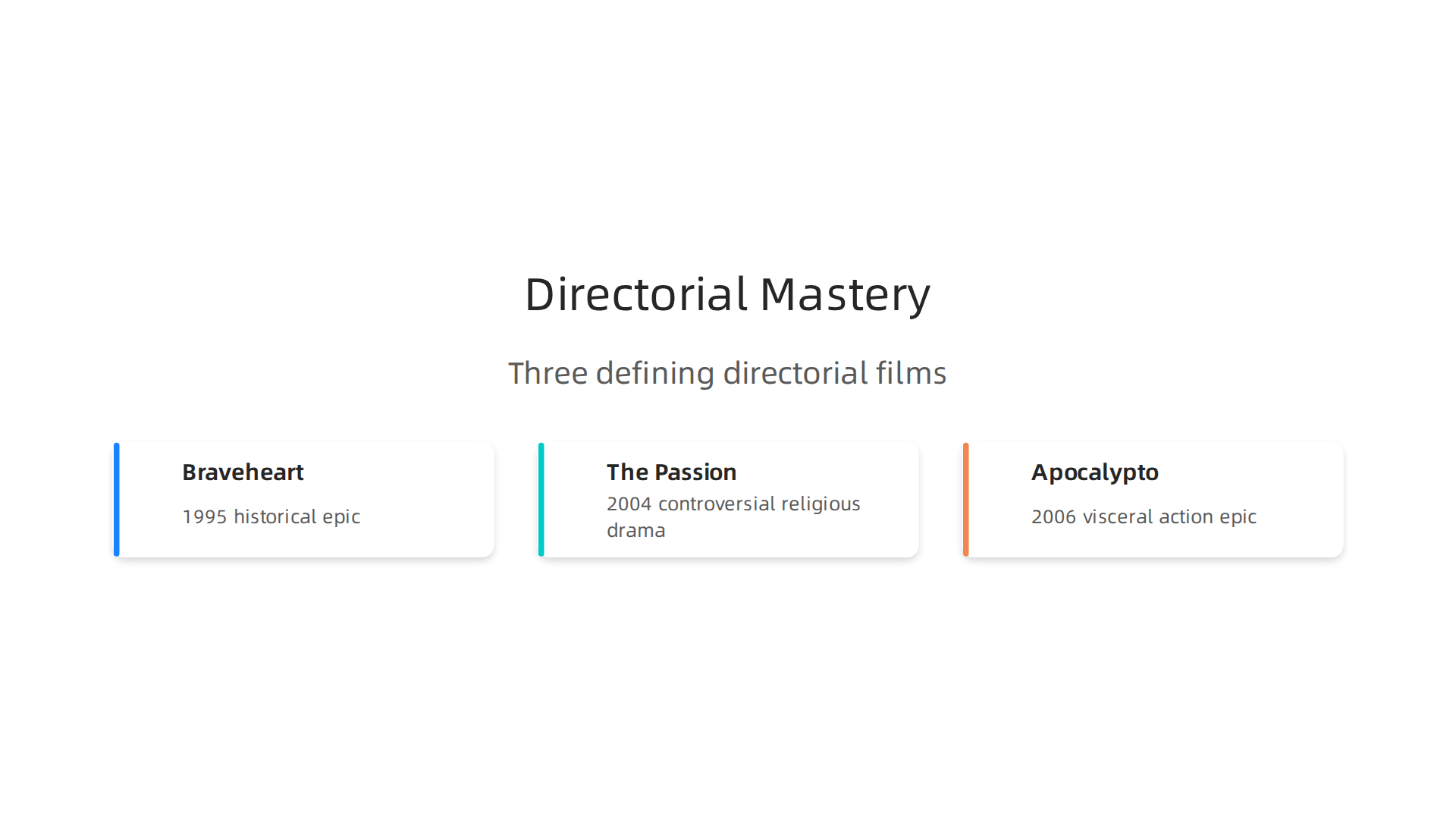
Directorial Mastery: Behind the Camera with Braveheart, Passion, and Apocalypto
So here’s the thing about mel gibson movies. After conquering the screen as an action hero and dramatic actor, Gibson did something most stars never even try. He stepped behind the camera. And when he did, he didn’t just make good films. He made films that changed the conversation completely.

Braveheart (1995): A Statement That Shook Hollywood
Gibson’s second directorial effort Braveheart was more than a movie. It was a declaration. He starred as William Wallace, a Scottish farmer who leads a revolt against English rule in the 1300s. The battle scenes were raw. The cinematography was stunning. As The Movie Elite puts it, the film is "an obviously well-made film with stunning cinematography and top-notch battle scenes." It won five Academy Awards, including Best Picture and Best Director for Gibson himself.
Of course, critics have pointed out the historical inaccuracies. Some say the story was rewritten to fit a dramatic narrative. The Dissolve called it "flagrant historical inaccuracy." But for audiences in 1995, the emotional power was undeniable. Gibson proved he could handle a massive epic with real skill. This was not just another action star trying to direct. This was a filmmaker.
The Passion of the Christ (2004): A Cultural Earthquake
Then came The Passion of the Christ. It was a risky project. Gibson filmed it entirely in Aramaic and Latin. No big Hollywood studio wanted to touch it. But Gibson believed in it. The movie became a massive box office surprise, making over $600 million worldwide. It sparked conversations in churches, schools, and living rooms everywhere. Love it or hate it, you couldn’t ignore it. This film showed Gibson was willing to take huge creative risks that other directors, even giants like steven spielberg movies, might not take.
Apocalypto (2006): Pure Visual Power
Gibson followed up with Apocalypto, a film set in the pre-Columbian Mayan world. He cast unknown actors, used a little-known language again, and created a chase film that felt both ancient and modern. The visual storytelling was breathtaking. There was almost no dialogue you could understand, but you felt every second. It proved Gibson cared more about making bold, striking cinema than playing it safe.
These three films define Gibson’s directorial era. He didn’t just entertain. He made you feel something real, even if it was uncomfortable.
If you love discovering powerful films like these and want to avoid hours of scrolling, let us help. Browse movies that match your taste with curated lists and honest reviews. No more guessing what to watch next.
Navigating Public Controversies: Impact on Career and Film Legacy
After such bold filmmaking, you might think Gibson’s career would stay on a steady upward climb. But real life is messier than movies. Starting in the 2000s and carrying into the 2010s, Gibson’s personal life became a storm of public controversies.
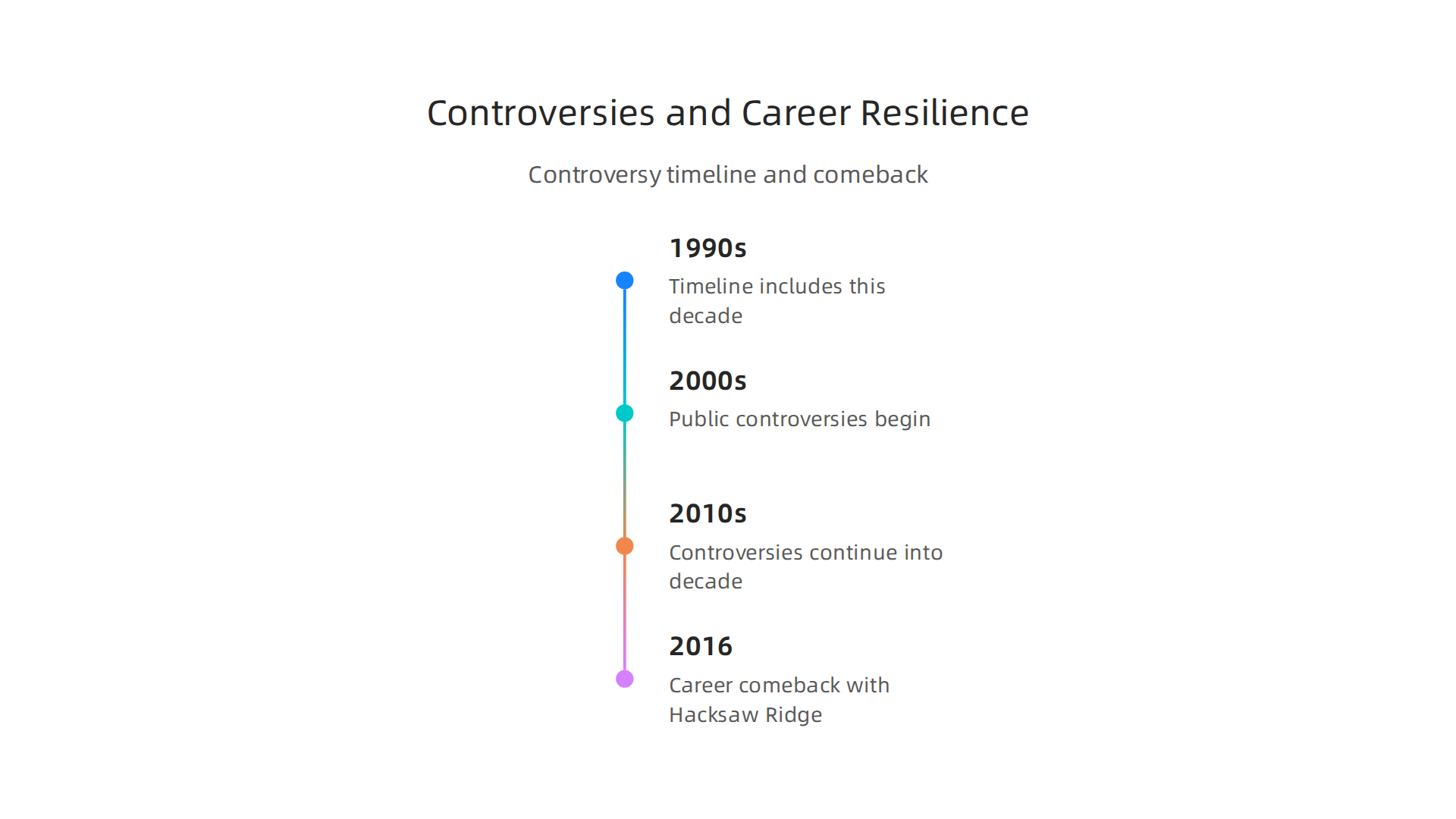
These events had a real impact on how people saw him and how Hollywood treated him.
A Timeline of Personal and Legal Issues
The controversies weren’t a single incident. They built up over years. According to a detailed timeline from Business Insider, Gibson faced allegations of homophobia in the 1990s, a DUI arrest in 2006 with antisemitic remarks, and a leaked audio recording in 2010 with racist and sexist language. These moments made headlines and changed the conversation about him. For many fans, it was hard to separate the actor from the actions.
The controversy around The Passion of the Christ also played a part. Some critics accused the film of carrying subliminal messages. A lecture at Graduate Theological Union even explored those claims. All of this added to a cloud that hung over his name.
Impact on His Career
So what happened to his career? For a while, it slowed down. Major studios were less eager to work with him. He went from directing Oscar-winning epics to mostly acting roles in smaller films. But here’s the thing: Gibson didn’t disappear. He kept working. As Britannica notes, he continued to act in films like Edge of Darkness and The Expendables 3. Then in 2016, he made a huge comeback as a director with Hacksaw Ridge. That film earned him an Academy Award nomination for Best Director and proved his talent was still undeniable. Wikipedia sums up his career as a mix of massive highs and serious lows, but the creative drive never left.
What Does This Mean for His Legacy?
Gibson’s story is a reminder that talent and controversy can live side by side. Studies on celebrity scandals show that public forgiveness is often partial. Some viewers will always avoid mel gibson movies because of what he said or did. Others focus on the art and separate it from the artist. The truth is, his films still matter. Braveheart, The Passion of the Christ, and Apocalypto are powerful works. So is Hacksaw Ridge. But his legacy will always carry those sharp edges.
If you’re the kind of movie lover who wants to explore films that stir real emotion, you don’t have to settle for just any list. We’ve got curated recommendations that cut through the noise. For example, check out our roundup of the best sci-fi movies to stream in 2026 for a fresh batch of must-sees. And if you want to keep discovering films that match your taste, take the next step.
Browse movies that suit your mood with curated lists and honest reviews. No more guessing. Just great cinema.
Hidden Gems: Underrated Mel Gibson Movies Worth Your Time
By now you know the big hits: Braveheart, The Passion of the Christ, Mad Max. But some of the best mel gibson movies are the ones that don’t get as much spotlight.
A few of them are quiet, thoughtful dramas. Others are action thrillers that hold up better than you might remember. Let’s dive into the underrated picks that deserve a spot on your watchlist.
1. The Man Without a Face (1993)
This was Gibson’s directorial debut, and it’s a total shift from his action hero image. He plays a disfigured recluse who tutors a troubled boy. It’s a small, emotional story about trust and healing. If you only know Gibson for explosions and war cries, this one will surprise you. It shows real dramatic depth, and it’s a strong early sign of his skills behind the camera.
2. Ransom (1996)
Directed by Ron Howard, this thriller was a huge hit when it came out. But in the years since, it’s kind of faded from the conversation about great 90s movies. Gibson plays a wealthy father whose son is kidnapped. Instead of paying the ransom, he goes on TV and offers the money as a bounty on the kidnappers. It’s tense, smart, and features one of Gibson’s most intense performances. The movie grossed over $100 million at the box office, according to The Movie Times. That’s proof that audiences loved it, even if it doesn’t get the same love today as Braveheart.
3. Signs (2002)
You probably remember this M. Night Shyamalan film. It’s a fan favorite, but it often gets overshadowed by Shyamalan’s other hits like The Sixth Sense or by Gibson’s own bigger films. It’s a slow burn sci-fi story about a farmer who discovers crop circles in his cornfield. Gibson plays a former priest who has lost his faith. The movie is less about aliens and more about grief, family, and believing again. If you like sci-fi that makes you think, check out our roundup of the best sci-fi movies to stream in 2026 for more hidden gems like it.
4. Late Career Surprises
After the controversies, Gibson didn’t stop doing interesting work. In Dragged Across Concrete (2018), he plays a veteran cop who teams up with a younger officer after a suspension. The film is gritty and slow, but critics praised it. According to Collider, it’s Gibson’s most underrated performance, and it even got a new streaming release in early 2026. That should tell you it’s worth a watch.
Then there’s The Professor and the Madman (2019). Gibson plays a professor who helps create the Oxford English Dictionary alongside a mentally ill contributor. It’s a thoughtful historical drama that flew under the radar. Not many people saw it, but it’s a quiet, fascinating role for Gibson.
5. What’s Next?
Gibson isn’t done yet. In 2026, he’s starring in Hunting Season (trailer already out) and he’s still working on The Resurrection of Christ, as reported by World of Reel. So fans of his deeper, more artistic projects have plenty to look forward to.
Whether you’re in the mood for a heavy drama like The Professor and the Madman or a tense thriller like Ransom, these mel gibson movies show a range that goes way beyond his biggest blockbusters. They’re the kind of films that reward a second watch.
Ready for More Underrated Films?
If you loved digging into these hidden gems, don’t stop here. We’ve got curated lists and honest reviews that help you cut through the noise. Whether you’re into jack black movies, julia roberts movies, steven spielberg movies, or channing tatum movies, there’s always something surprising waiting for you.
Browse Movies that match your mood with personalized filters and recommendations. Skip the guesswork and find your next great watch.
A Cinematic Legacy: Impact on Action, Historical Epics, and Independent Filmmaking
Now that we’ve uncovered some hidden gems in Mel Gibson’s career, let’s step back and see the bigger picture. His movies didn’t just fill theaters. They changed the way action, history, and independent films are made. Here are three ways Gibson left a mark that still lasts today.
Changing Action Movies Forever
Before Gibson, many action scenes looked crisp and rehearsed. Then came Mad Max and Braveheart. Gibson brought a raw, messy feel to fight sequences. In Braveheart, the battles feel brutal and real. One review from The Movie Elite called those scenes "top-notch battle scenes" that set a new standard for medieval combat. Gibson’s Apocalypto (2006) pushed this even further. The movie opened at number one at the box office, according to Rotten Tomatoes. That proved audiences wanted action that felt dangerous, not fake.
Reviving Historical Epics
When Braveheart hit theaters in 1995, it won five Oscars including Best Picture. Suddenly, studios wanted to make more historical epics. Films like Gladiator and The Last Samurai owe a debt to Gibson’s success. According to The Richest, Braveheart is one of the highest-grossing films Gibson ever directed. His 2016 film Hacksaw Ridge continued that tradition. It told the true story of a medic who saved lives during World War II. The film earned six Oscar nominations and showed that historical dramas still have a place in modern cinema.
The Comeback Story
After personal struggles, many thought Gibson’s career was done. Then he proved them wrong. In 2016, he directed Hacksaw Ridge and starred in Blood Father. Hacksaw Ridge was a critical and commercial hit. It grossed over $175 million worldwide, per Gibson’s box office stats on The Movie Times. Blood Father was a tight action thriller that reminded fans why they loved him. These films showed resilience. They also inspired other directors to take risks on bold, character-driven stories. If you enjoy that kind of fearless filmmaking, check out the new Ryan Coogler film Sinners. It carries a similar rebellious spirit. Read our Sinners movie review for more.
Whether he’s in front of the camera or behind it, Mel Gibson has shaped action, history, and independent filmmaking. His best work continues to influence directors today.
Ready to Explore More Influential Films?
His legacy shows that one person’s vision can change an entire industry.

If you want to discover more movies that broke the mold, we can help. Browse our curated lists and honest reviews.
Browse Movies that match your mood. Skip the endless scrolling and find your next great watch.
Summary
This guide walks through Mel Gibson’s four-decade career, explaining why his filmography still matters in 2026 and which titles deserve your time. It covers his early rise from Mad Max to Lethal Weapon, his move into directing with Braveheart, The Passion of the Christ and Apocalypto, and the later comeback with Hacksaw Ridge. The article also explains how public controversies affected his opportunities and public image, without downplaying the artistic impact of his best work. You’ll find a selection of underrated performances and smaller films that reward repeat viewing, plus context on how Gibson reshaped action and historical epics. By the end you’ll know which signature films to prioritize, how to approach controversial legacy films, and where to look for more curated recommendations.